

TIRZEPATIDE
REFERENCE STANDARD
Manufactured for Researchers Who Refuse to Compromise
Velora Biolabs manufactures, lyophilizes, packages, and fulfills research materials directly from our Wyoming laboratory.
Every production lot is assigned unique batch documentation, QR traceability, and lot-specific verification to support consistency and reproducibility.
Unlike suppliers relying on aging inventory and third-party fulfillment, Velora maintains direct oversight from production through shipment.
- Regular price
-
$69.00 - Sale price
-
$69.00
Couldn't load pickup availability


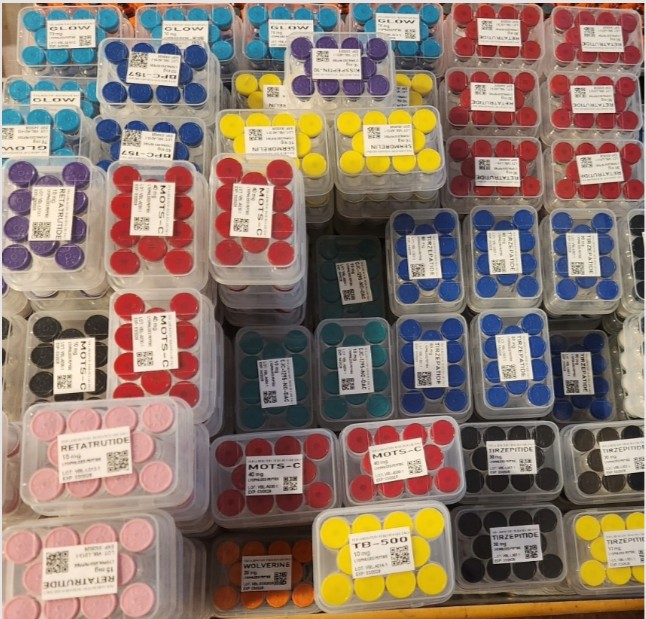
CURRENT LOT INVENTORY
Photographed inventory manufactured, packaged, and fulfilled directly by Velora Biolabs in Wyoming, USA.
✓ Fresh Production Lots
✓ QR Verification
✓ Batch Documentation
✓ Domestic Fulfillment
✓ Direct Manufacturer Support
Scientific Background
Advanced Metabolic, Obesity & Insulin Sensitivity Research Peptide
Category:
Metabolic Research • Obesity Biology • Endocrine Signaling • Insulin Resistance
What Researchers Study
Tirzepatide is a synthetic dual-incretin peptide that simultaneously activates:
-
GLP-1 (Glucagon-Like Peptide-1) receptors
-
GIP (Glucose-Dependent Insulinotropic Polypeptide) receptors
This dual mechanism allows researchers to study coordinated metabolic signaling, rather than isolated appetite suppression or insulin stimulation.
Tirzepatide is widely used as a reference compound for:
-
Advanced obesity models
-
Insulin resistance and diabetes research
-
Fat vs lean mass partitioning
-
Incretin synergy and receptor cross-talk
-
Comparative studies against GLP-1 mono-agonists (e.g., semaglutide)
Primary Signal Pathways Studied
-
GLP-1 receptor signaling
-
GIP receptor signaling
-
Pancreatic β-cell insulin secretion
-
Central appetite regulation
-
Peripheral insulin sensitivity
-
Adipocyte nutrient partitioning
-
Energy expenditure modulation
Tirzepatide enables study of dual incretin amplification, not achievable with GLP-1-only peptides.
Why This Molecule Matters in Research
GLP-1 agonists reduce appetite — but often plateau.
GIP alone can be obesogenic — but in combination, it becomes metabolically synergistic.
Tirzepatide demonstrates that:
-
GIP signaling reprograms adipose tissue
-
GLP-1 controls appetite and glycemia
-
Together, they produce greater fat loss, better insulin sensitivity, and improved metabolic flexibility
This makes tirzepatide a mechanistic bridge between:
-
Semaglutide (GLP-1 mono-agonist)
-
Retatrutide (GLP-1 + GIP + Glucagon triple agonist)
Mechanism of Action (Research Context)
GLP-1 Axis
-
Enhances glucose-dependent insulin secretion
-
Suppresses glucagon during hyperglycemia
-
Slows gastric emptying
-
Reduces central appetite signaling
GIP Axis
-
Improves insulin sensitivity in adipose tissue
-
Enhances nutrient uptake efficiency
-
Modulates fat storage vs oxidation
-
Alters adipokine signaling
Combined Effect
-
Greater body weight reduction than GLP-1 alone
-
Superior HbA1c and insulin sensitivity outcomes
-
Improved fat-to-lean mass ratio during weight loss
Key Research Domains
1. Obesity & Body Composition Research
Tirzepatide consistently demonstrates:
-
Greater total weight reduction than GLP-1 mono-agonists
-
Preferential loss of fat mass
-
Better lean mass preservation
Researchers frequently use tirzepatide as a control comparator in next-generation obesity peptide development.
2. Insulin Resistance & Glycemic Control
Tirzepatide is studied for:
-
Enhanced insulin secretion (glucose-dependent)
-
Improved peripheral insulin sensitivity
-
Reduced fasting glucose and HOMA-IR
-
β-cell functional preservation
Its dual incretin action allows deeper study of pancreatic–adipose communication.
3. Lipid & Hepatic Metabolism
Observed research effects include:
-
Reduced triglycerides
-
Improved LDL / HDL ratios
-
Decreased hepatic fat accumulation
-
Improved markers of NAFLD/NASH in animal models
4. Comparative Incretin Research
Tirzepatide is frequently compared against:
-
Semaglutide (GLP-1 only)
-
Liraglutide
-
Retatrutide (triple agonist)
This positions it as a benchmark peptide in metabolic signaling studies.
Research Application Guidelines
For experimental planning only — not for human or veterinary use.
| Research Model | Typical Range | Route | Study Focus |
|---|---|---|---|
| In-vitro | 1–100 nM | Cell media | Receptor binding, insulin signaling |
| Rodent models | 0.1–0.5 mg/kg | SC | Weight, glucose, insulin sensitivity |
| Primate models | 0.05–0.15 mg/kg | SC | Body composition, glycemic control |
| Chronic studies | Weekly dosing | SC | Long-term metabolic adaptation |
Product Specifications
-
Compound Name: Tirzepatide
-
CAS Number: 2023788-19-2
-
Molecular Formula: C₂₂₅H₃₄₈N₄₈O₆₈
-
Molecular Weight: 4,813.53 Da
-
Peptide Class: Dual incretin receptor agonist
-
Purity: ≥98% (HPLC verified)
-
Form: Lyophilized powder
-
Appearance: White to off-white solid
Batch Documentation & Traceability
Each vial is shipped with a lot-specific QR code that provides secure access to batch documentation, including:
• Certificate of Analysis (COA)
• Identity verification report (HPLC / MS)
• Lot number, potency, and expiration
Documentation is locked to the specific batch shipped to ensure traceability, version control, and research reproducibility.
QR access is provided with the physical product and is not reused across lots.
Research Use Disclaimer
This product is supplied strictly for laboratory research use.
Not for human or veterinary consumption, diagnosis, or treatment.