

MOTS-C
REFERENCE STANDARD
Manufactured for Researchers Who Refuse to Compromise
Velora Biolabs manufactures, lyophilizes, packages, and fulfills research materials directly from our Wyoming laboratory.
Every production lot is assigned unique batch documentation, QR traceability, and lot-specific verification to support consistency and reproducibility.
Unlike suppliers relying on aging inventory and third-party fulfillment, Velora maintains direct oversight from production through shipment.
- Regular price
-
$39.00 - Sale price
-
$39.00
Couldn't load pickup availability


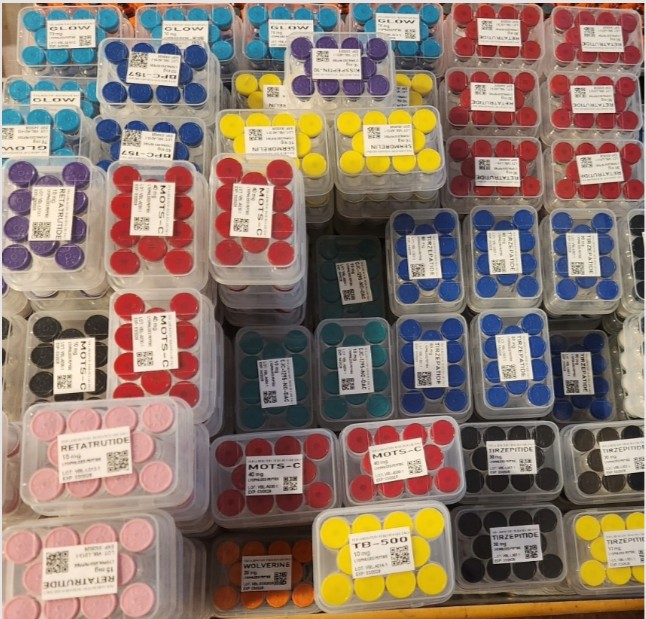
CURRENT LOT INVENTORY
Photographed inventory manufactured, packaged, and fulfilled directly by Velora Biolabs in Wyoming, USA.
✓ Fresh Production Lots
✓ QR Verification
✓ Batch Documentation
✓ Domestic Fulfillment
✓ Direct Manufacturer Support
Scientific Background
Mitochondrial-Derived Peptide for Metabolic Signaling, Cellular Stress & Longevity Research
Category:
Mitochondrial & Metabolic Signaling • Longevity & Cellular Stress Response • Insulin & Energy Homeostasis
What Researchers Study
MOTS-c (Mitochondrial Open Reading Frame of the 12S rRNA-c) is a mitochondrial-encoded peptide consisting of 16 amino acids. Unlike most signaling peptides encoded by nuclear DNA, MOTS-c originates from the mitochondrial genome and exerts effects on nuclear gene expression and metabolic regulation.
Researchers study MOTS-c as a mitochondrial-to-nuclear signaling molecule, investigating how mitochondria communicate metabolic status, stress signals, and energy availability to the rest of the cell.
Primary Signal Pathways Studied
Research involving MOTS-c focuses on its role in:
-
AMP-activated protein kinase (AMPK) signaling, central to cellular energy sensing
-
Glucose and insulin-related metabolic pathways, linking mitochondrial function to nutrient handling
-
Mitochondrial–nuclear cross-talk, influencing gene expression under metabolic stress
-
Oxidative stress response mechanisms, supporting cellular resilience
-
Age-associated metabolic regulation, particularly in muscle and metabolically active tissues
MOTS-c is notable for acting as a systemic mitochondrial signal, rather than a receptor-bound hormone.
Why This Peptide Is Studied
Mitochondrial dysfunction is a core driver of metabolic disease, aging, and cellular stress intolerance. Many metabolic regulators act downstream of mitochondria, making causality difficult to isolate.
MOTS-c is studied because it allows researchers to:
-
Examine direct mitochondrial signaling to the nucleus
-
Investigate how mitochondria regulate whole-cell metabolic programs
-
Explore mechanisms linking aging, insulin sensitivity, and energy metabolism
-
Study adaptive responses to metabolic and oxidative stress
This positions MOTS-c as a central research tool in mitochondrial biology and longevity science.
Research Areas of Interest
Metabolic & Insulin Signaling Research
MOTS-c is widely studied in models of insulin resistance, glucose handling, and metabolic stress.
Longevity & Cellular Stress Biology
Research explores how mitochondrial-derived peptides influence cellular aging, stress resistance, and metabolic decline.
Mitochondrial Communication Pathways
MOTS-c is a key model compound for studying mitochondrial retrograde signaling—how mitochondria regulate nuclear gene expression.
Neuro-Metabolic & Systemic Energy Regulation
Emerging research investigates how mitochondrial signaling peptides affect tissues with high energetic demand.
Selected Scientific References
-
Lee et al., Cell Metabolism — Discovery of MOTS-c and AMPK-mediated metabolic regulation
-
Kim et al., Aging Cell — MOTS-c and oxidative stress resistance
-
Zempo et al., FASEB Journal — Mitochondrial-derived peptides and aging
-
Reynolds et al., Diabetes — MOTS-c and glucose metabolism
(References provided for educational context and literature navigation.)
Product Specifications
-
Compound Name: MOTS-c (Mitochondrial Open Reading Frame of 12S rRNA-c)
-
CAS Number: 1627580-64-6
-
Molecular Formula: C₁₀₁H₁₅₂N₂₈O₂₂S₂
-
Amino Acid Sequence: Met-Arg-Trp-Gln-Glu-Met-Gly-Tyr-Ile-Phe-Tyr-Pro-Arg-Lys-Leu-Arg
-
Molecular Weight: 2,174.6 Da
-
Purity: ≥98% (HPLC verified)
-
Form: Lyophilized powder
-
Appearance: White to off-white solid
-
Storage: ≤ –20 °C, desiccated, protected from light
Batch Documentation & Traceability
Each vial is shipped with a lot-specific QR code that provides secure access to batch documentation, including:
• Certificate of Analysis (COA)
• Identity verification report (HPLC / MS)
• Lot number, potency, and expiration
Documentation is locked to the specific batch shipped to ensure traceability, version control, and research reproducibility.
QR access is provided with the physical product and is not reused across lots.
Research Use Disclaimer
This product is supplied strictly for laboratory research and in-vitro or preclinical investigation.
Not for human or veterinary use.
Not for diagnostic, therapeutic, cosmetic, or consumptive applications.