

EPITALON
REFERENCE STANDARD
Manufactured for Researchers Who Refuse to Compromise
Velora Biolabs manufactures, lyophilizes, packages, and fulfills research materials directly from our Wyoming laboratory.
Every production lot is assigned unique batch documentation, QR traceability, and lot-specific verification to support consistency and reproducibility.
Unlike suppliers relying on aging inventory and third-party fulfillment, Velora maintains direct oversight from production through shipment.
- Regular price
-
$29.00 - Sale price
-
$29.00
Couldn't load pickup availability


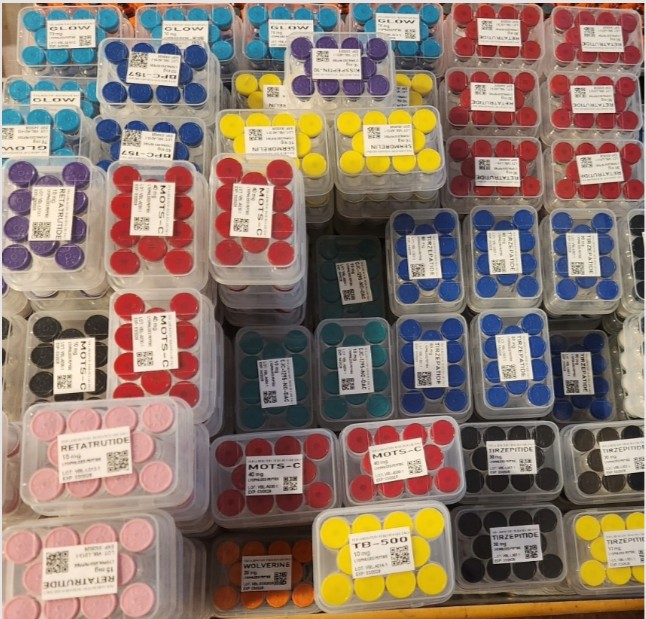
CURRENT LOT INVENTORY
Photographed inventory manufactured, packaged, and fulfilled directly by Velora Biolabs in Wyoming, USA.
✓ Fresh Production Lots
✓ QR Verification
✓ Batch Documentation
✓ Domestic Fulfillment
✓ Direct Manufacturer Support
Scientific Background
Tetrapeptide for Telomere Biology & Cellular Longevity Signaling Research
Category:
Longevity & Cellular Senescence • Telomere Biology • Circadian & Neuroendocrine Signaling
What Researchers Study
Epitalon (also known as Epithalon or Epithalone) is a synthetic tetrapeptide (Ala-Glu-Asp-Gly) originally derived from the pineal peptide complex epithalamin. Researchers study Epitalon for its role in telomere regulation, cellular aging, and circadian-associated gene expression.
In laboratory and preclinical models, Epitalon is investigated as a signaling peptide that may influence cellular lifespan, genomic stability, and age-associated molecular processes, rather than as a direct growth or stimulant compound.
Primary Signal Pathways Studied
Research involving Epitalon focuses on its interaction with:
-
Telomerase-associated signaling, including regulation of telomerase reverse transcriptase (TERT) expression
-
Telomere length maintenance, particularly in replicative senescence models
-
Epigenetic gene regulation, including chromatin structure and DNA methylation patterns
-
Circadian and pineal-associated signaling, linked to melatonin regulation and neuroendocrine coordination
-
Antioxidant and cellular stress-response systems, relevant to aging biology
Epitalon is frequently studied for its genomic and epigenetic influence, rather than acute biochemical effects.
Why This Peptide Is Studied
Cellular aging is driven by cumulative genomic instability, telomere shortening, and dysregulated gene expression. Many longevity-related compounds act indirectly or systemically, making mechanistic attribution difficult.
Epitalon is studied because it provides researchers with a direct tool for examining telomere-associated and epigenetic mechanisms, enabling investigation into:
-
The relationship between telomere dynamics and cellular lifespan
-
How short peptides influence gene expression in aged cells
-
Interactions between circadian signaling and cellular aging
This positions Epitalon as a core research compound in longevity science, senescence modeling, and systems-level aging biology.
Research Areas of Interest
Telomere & Cellular Senescence Research
Epitalon is widely studied in cell-culture and preclinical models assessing telomere length, population doublings, and senescence-associated markers.
Longevity & Healthspan Biology
Research explores how epigenetic and telomerase-associated signaling correlates with lifespan, disease resistance, and age-related molecular decline.
Circadian & Neuroendocrine Regulation
Because of its pineal origin, Epitalon is also examined in circadian rhythm and neuroendocrine coordination studies, particularly those related to aging.
Selected Scientific References
-
Khavinson et al., Bulletin of Experimental Biology and Medicine — Peptide regulation of cell proliferation and aging
-
Anisimov et al., Neuroendocrinology Letters — Circadian rhythm modulation and aging models
-
Khavinson et al., Advances in Gerontology — Epigenetic regulation and telomere biology
-
Trofimova et al., Bulletin of Experimental Biology and Medicine — Age-associated retinal and tissue models
(References provided for educational context and literature navigation.)
Product Specifications
-
Compound Name: Epitalon (Epithalon / Epithalone)
-
CAS Number: 307297-39-8
-
Molecular Formula: C₁₄H₂₂N₄O₉
-
Amino Acid Sequence: Ala-Glu-Asp-Gly
-
Molecular Weight: 390.35 Da
-
Purity: ≥98% (HPLC verified)
-
Form: Lyophilized powder
-
Appearance: White to off-white solid
-
Storage: ≤ –20 °C, desiccated, protected from light
Batch Documentation & Traceability
Each vial is shipped with a lot-specific QR code that provides secure access to batch documentation, including:
• Certificate of Analysis (COA)
• Identity verification report (HPLC / MS)
• Lot number, potency, and expiration
Documentation is locked to the specific batch shipped to ensure traceability, version control, and research reproducibility.
QR access is provided with the physical product and is not reused across lots.
Research Use Disclaimer
This product is supplied strictly for laboratory research and in-vitro or preclinical investigation.
Not for human or veterinary use.
Not for diagnostic, therapeutic, or consumptive applications.