
Metabolic Research
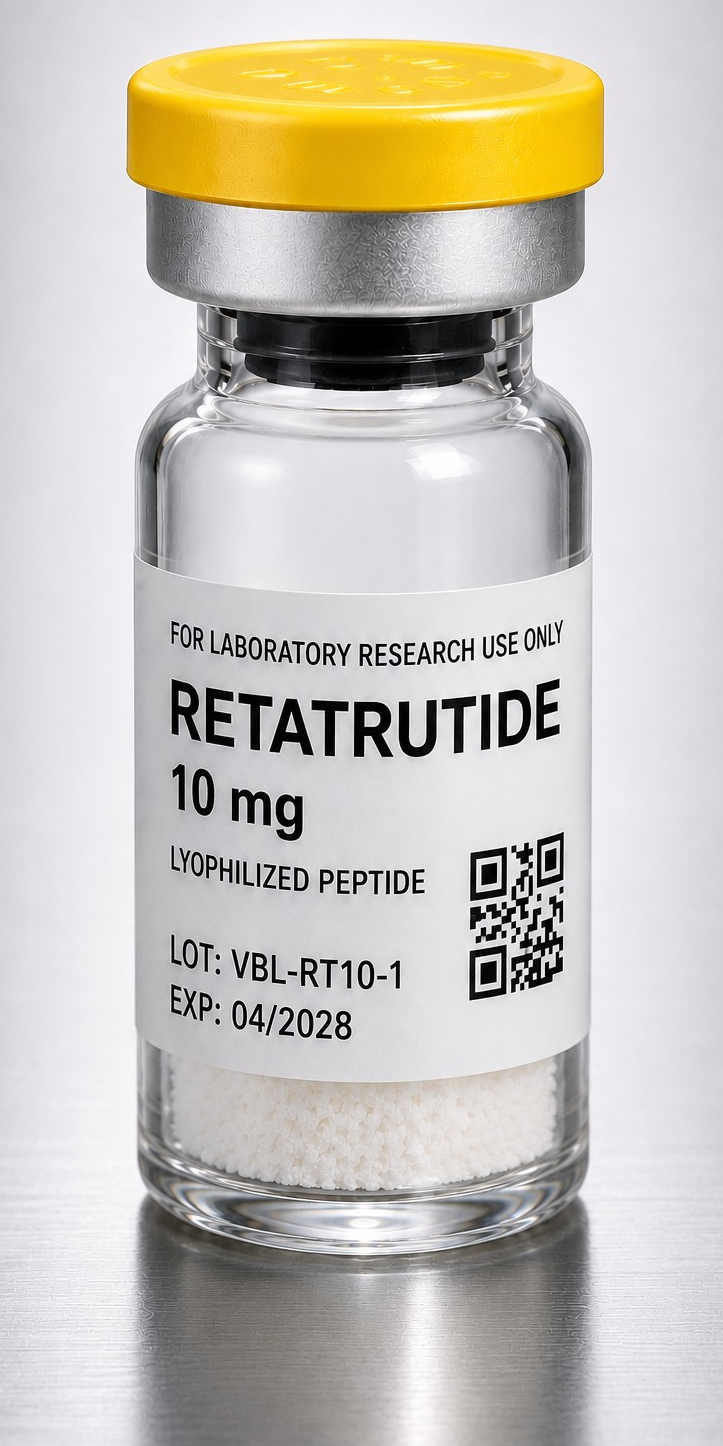
Scientific Specifications
Reference characteristics for laboratory research materials.
CAS Number
2381089-83-2
Purity
≥99%
Molecular Formula
C221H342N46O68
Molecular Weight
4731.33 g/mol
Appearance
White Lyophilized Powder
Solubility
Water Soluble (≥30 mg/mL)
Storage
Store at -20°C
Research Classification
Laboratory Reference Material
SCIENTIFIC OVERVIEW
Scientific background and research classification for this laboratory reference material.
Lyophilized Peptide
Laboratory Reference Material
Metabolic Signaling
Weight Management
Endocrine Research
Mechanism of Action
Molecular interaction profile describing how this laboratory reference material engages receptor systems and influences downstream biological signaling pathways.
{"type":"root","children":[{"type":"paragraph","children":[{"type":"text","value":"Retatrutide functions as a balanced triple receptor agonist that binds and activates:"}]},{"type":"paragraph","children":[{"type":"text","value":"• GLP-1 Receptor (GLP-1R)"}]},{"type":"paragraph","children":[{"type":"text","value":"• GIP Receptor (GIPR)"}]},{"type":"paragraph","children":[{"type":"text","value":"• Glucagon Receptor (GCGR)"}]},{"type":"paragraph","children":[{"type":"text","value":"Activation of these receptors produces coordinated signaling that influences glucose utilization, insulin secretion, hepatic glucose metabolism, lipid oxidation, appetite regulation, and energy expenditure. The simultaneous engagement of three complementary pathways differentiates Retatrutide from mono- and dual-receptor agonists and provides a valuable experimental model for studying integrated metabolic physiology."}]}]}
GLP-1 Signaling
GIP Signaling
Glucagon Signaling
Insulin Signaling
Glucose Uptake
Lipolysis
Lipogenesis
Fatty Acid Oxidation
Endocrine System
Gastrointestinal System
Hepatic System
Cardiovascular System
Certificate of Analysis
Every production lot is independently analyzed by an ISO/IEC 17025 accredited laboratory to verify identity, purity, analytical content, and quality attributes.
✓ PASS
Third-Party Certificate of Analysis
Independent laboratory testing verifies:
- Identity Confirmation
- HPLC Purity Analysis
- Net Peptide Content
- Endotoxin Testing
- Analytical Chromatogram
- Laboratory Authentication
Scientific References
Peer-Reviewed Literature
Explore published literature, clinical investigations, and foundational scientific research.
View References →
Laboratory Resources
Technical Guidance
Storage guidance, handling recommendations, analytical methods, and laboratory best practices.
View Resources →
Related Research
Companion Materials
Discover complementary laboratory reference materials frequently studied alongside this compound.
Explore →Research Center
Scientific literature, laboratory resources, and related materials curated to support research involving this laboratory reference material.
Scientific References
Peer-Reviewed Literature
Explore curated publications from peer-reviewed journals including clinical investigations, mechanistic studies, and foundational scientific literature.
Browse References →
Laboratory Resources
Technical Guidance
Storage guidance, handling information, analytical standards, research policies, and laboratory support documentation.
Open Resources →
Related Research
Companion Materials
Discover complementary laboratory reference materials frequently studied alongside this compound.
Explore Materials →Research Library
Curated peer-reviewed literature selected to provide scientific context for this laboratory reference material.
Retatrutide, a Triple-Hormone Receptor Agonist for Obesity
Phase II clinical investigation evaluating triple receptor agonism across GLP-1, GIP, and Glucagon receptor pathways.
Velora Research Insight
This publication established the scientific foundation for triple receptor agonism as an emerging metabolic research strategy. It remains one of the most influential studies involving Retatrutide.
Glucagon Receptor Agonism and Energy Expenditure
Mechanistic investigation describing glucagon receptor signaling and energy metabolism.
Velora Research Insight
Provides important mechanistic context supporting the role of glucagon receptor activation in metabolic regulation.
Triple Agonists in Metabolic Disease
Comprehensive review of GLP-1, GIP and Glucagon receptor agonists in metabolic research.
Velora Research Insight
Summarizes the evolution of triple agonist research while providing broader scientific context beyond individual clinical studies.